
From Wind to Wheels: How Green Fuels Complete the Clean Energy Puzzle
Exploring how renewable fuels and Kaigia’s advanced engine technology enable efficient, zero-emission mobility across drones, aircraft, marine, and freight applications.
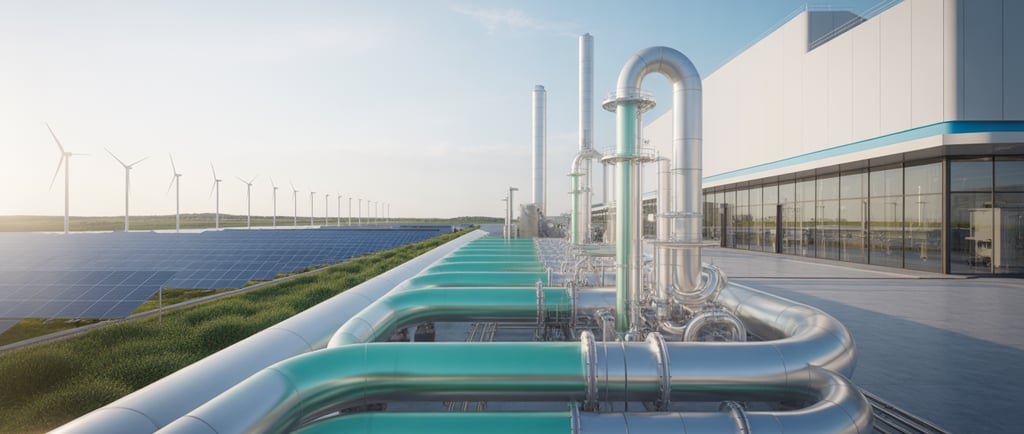

Beyond Electricity Alone: Embracing Renewable Fuels for Sustainable Mobility
The transition to sustainable mobility goes beyond electric vehicles (EVs). While EVs are central to reducing emissions, renewable fuels—produced from clean energy—offer complementary advantages that make the future of transport more flexible and resilient across a wide range of vehicles and platforms.
Energy Density and Storage Efficiency
Different fuels store and deliver energy in very different ways. Hydrogen packs a lot of energy for its weight, but because it’s so light, it requires specialized tanks to store enough for longer trips. Ammonia, by contrast, holds more energy in a given volume, making it easier to store and transport efficiently. Other renewable fuels—such as methane, methanol, e-diesel, and biofuels—fit neatly into existing fueling infrastructure, enabling rapid refueling for drones, light aircraft, marine vessels, and freight vehicles alike. Synthetic kerosene and hydrogenated vegetable oils expand the possibilities further, particularly for aviation and heavy transport where full electrification remains challenging.
Local Production and System Resilience
These green fuels can be produced locally from surplus renewable electricity, effectively acting as a seasonal energy buffer. In regions rich in wind or solar power, they help keep transportation operations smooth even when the electric grid faces high demand or variability. For example, Nordic electricity networks are adapting to a higher share of renewables, illustrating how versatile fuel solutions can support grid stability and system resilience across different transport modes.
Kaigia: Bridging the Gap
This is where Kaigia’s Green Fuel Motor (GFM) shines. Unlike traditional engines that approximate ideal combustion cycles, Kaigia’s GFM precisely controls piston movement, ensuring each phase of the engine—compression, combustion, expansion, and scavenging—operates at its theoretical optimum. The result is engines capable of running on advanced clean fuels—hydrogen, ammonia, or biofuels—with zero tailpipe emissions, rapid refueling, and adaptable deployment across drones, light aircraft, marine vessels, and heavy freight. The system can also function as a compact range extender, allowing battery-electric platforms to reduce onboard energy storage while maintaining range and flexibility. Kaigia demonstrates how smart engineering can make mobility both sustainable and practical, no matter the vehicle or platform.
AI-assisted content. For general understanding only; energy systems and technologies evolve rapidly. Verify current information before acting.